Can Foreigners Use Didi in China?
Yes — foreign visitors can use DiDi (滴滴) for ride-hailing in mainland China, as long as you have mobile data, a working phone number for SMS verification, and a payment method the platform accepts. You do not need a Chinese ID card or a local bank account for the paths described in official visitor guides.
Who needs this: travelers who want app-based rides instead of waving down a taxi, especially in cities where street hail availability is uneven.
Who can skip it: day-trippers with a fixed hotel shuttle, people touring only walkable old towns, or anyone uncomfortable sharing live location with a ride-hail platform (use licensed taxi queues or pre-booked transfers instead).
Short answer: what works in practice
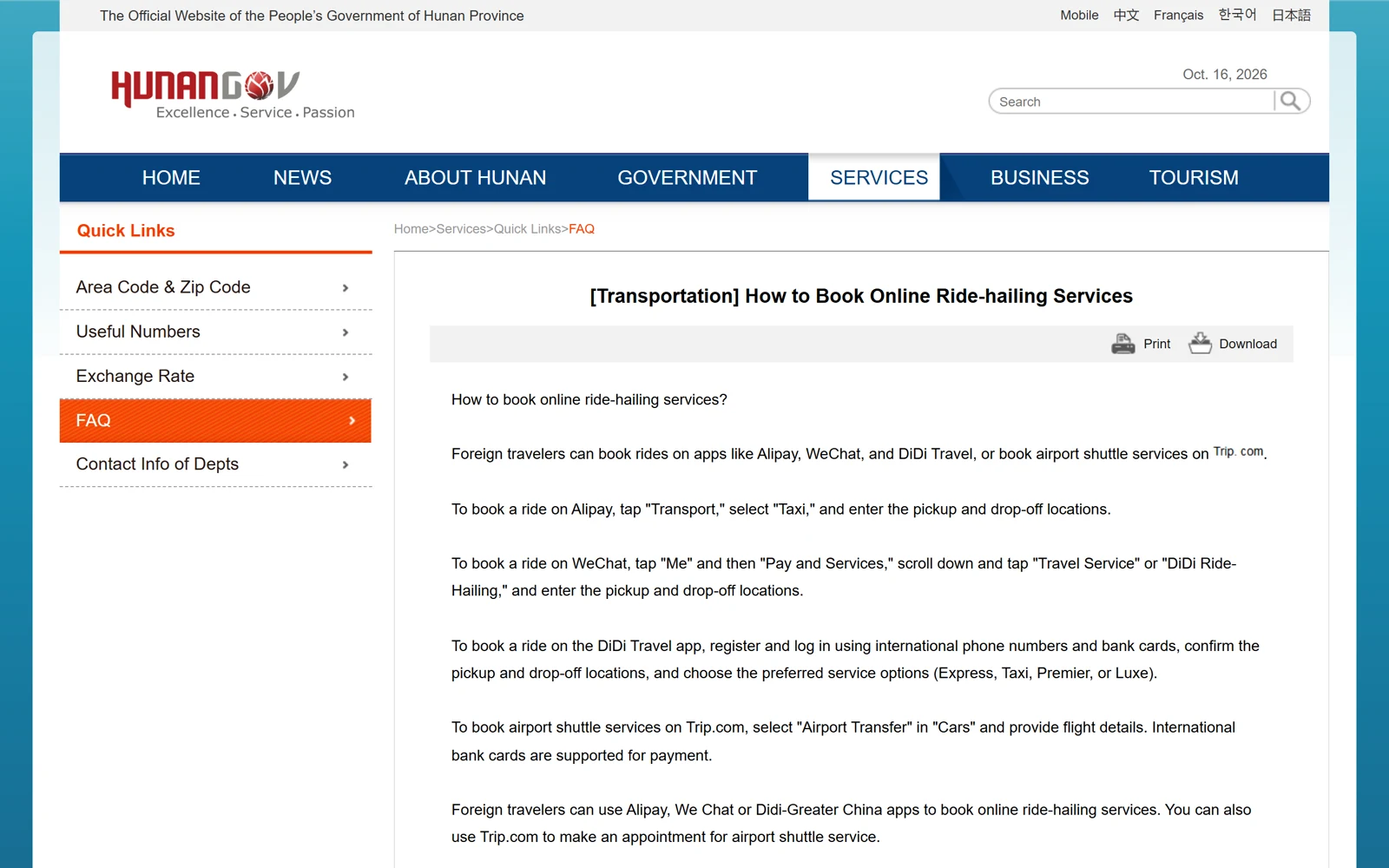
Official English-language service pages describe three parallel ways to book:
- DiDi Travel app (often labeled “Didi-Greater China” in government copy) — register with an international phone number and pay through linked electronic payment methods.
- Alipay — open Transport → Taxi, set pickup and drop-off, pay through your Alipay wallet.
- WeChat — open Me → Services, find Mobility / Ride-hailing / DiDi, then book inside the mini-program.
If you only do one thing before landing, finish mobile wallet setup and test a small payment. Ride-hailing failures in the field are often wallet or card issues, not GPS issues.
How ride-hailing fits into travel in China today
DiDi operates as the dominant ride-hailing network in most mainland cities. Drivers use the DiDi driver app; passengers use DiDi directly or through embedded entry points in Alipay and WeChat. Trips are priced upfront or by meter depending on service type, and payment is cashless in the vast majority of cases.
For foreigners, the friction moved from “Can I register?” to “Will my payment clear on the first try?” and “Can the driver find me at this gate?” Municipal guides in Guangzhou and Hunan explicitly promote English interfaces, overseas numbers, and international cards, which signals intent to serve visitors — but your bank and phone carrier still decide whether a given card or SMS route works.
Government tips repeat the same safety basics: enable location, match plate and driver photo, and prefer known platforms over unmarked cars. The China Daily government Q&A on taxis lists DiDi alongside Alipay and WeChat under ride-hailing apps and notes that international visitors should register in advance to enable online payment.
Street hail still exists, but the same official page warns that vacant lights can be misleading because a driver may already be en route to an app booking. For airport arrivals, train connections, or timed reservations, app booking is the more predictable option.
DiDi vs Amap vs Baidu Maps: which should you use?
All three solve different slices of the same problem — getting a car to a pin on a map — but they differ in language, habits, and backup options.
| Factor | DiDi app | Amap (Gaode) | Baidu Maps |
|---|---|---|---|
| Primary role | Dedicated ride-hail | Maps + mobility + local life | Maps + mobility |
| English UI | Strong in visitor-focused DiDi build; municipal guides cite full English | Improving but often Chinese-first labels | Chinese-first; key actions may stay in Chinese |
| Booking flow | Open app → set endpoints → pick service tier | Search place → tap ride → choose provider | Same pattern as Amap |
| Driver supply | Largest dedicated pool in many cities | Aggregates several ride platforms | Aggregates several ride platforms |
| Best when | You want ride-only UX, English support, trip history in one app | You already navigate in Amap all day | You rely on Baidu ecosystem or Baidu search results |
| Payment | Linked wallet or card per DiDi rules | Usually redirects to linked Alipay/WeChat or partner checkout | Same as Amap |
| Backup value | Keep Alipay/WeChat DiDi entry bookmarked | Good if DiDi app login breaks | Good for addresses found only on Baidu |
Practical decision rule: use DiDi when you want the simplest ride-hail mental model in English. Use Amap or Baidu when your day already lives inside one map app and you do not want to re-type addresses. Keep two paths installed — map aggregator plus DiDi or Alipay — so a single app update does not strand you after a late flight.
When Amap or Baidu beats opening DiDi first
Map apps shine when you discover a restaurant or hospital on the map and want one tap to ride without copying addresses between apps. They also help when a place name only appears in Chinese business listings. DiDi still receives the underlying order in many cases, but the search and pin placement happen in the map product you already trust.
When the standalone DiDi app is worth the home-screen slot
Choose DiDi if you want English-first menus, a single trip inbox, and municipal-promoted English customer service channels described for cities like Guangzhou. DiDi is also the cleaner choice if you dislike digging through super-app menus that move between software updates.
Scenarios: who can ride, who waits, who should plan ahead
Short city breaks (three to five days)
Works well. Install DiDi, link payment, save your hotel name in Chinese characters inside essential apps notes. Use ride-hail for late-night returns and airport runs if terminals allow app pickup.
First-time visitors with no Alipay or WeChat
Possible but brittle. You can register DiDi with an overseas number, yet payment may fail until a wallet or card path succeeds. Budget an extra hour on arrival for wallet setup on hotel Wi‑Fi, not on a sidewalk.
Travelers with only one foreign card
Mixed. Beijing Chaoyang’s official guide lists overseas Visa, Mastercard, Diners Club, and Discover for Alipay, and Visa, Mastercard, Diners Club, and JCB for WeChat Pay. Cards outside those networks, corporate cards with tight MCC blocks, or debit cards without strong 3-D Secure may fail. Treat Alipay-first as the default if DiDi direct binding errors.
Groups with large luggage or car seats
Plan ahead. Standard Express sedans may not fit four large suitcases. Use Premier/Luxe tiers when offered, or split into two cars. Mention luggage in any in-app note field if available.
Small towns and scenic areas
Variable. DiDi coverage follows driver density. In county towns you may see longer wait times or no match; keep taxi hotline 95128 (where available) or ask hotel staff to call a local cab.
Privacy-conscious travelers
Your choice. Ride-hail shares live location, phone contact, and trip history with the platform. Official street taxis still involve plate registration and often mobile payment. Pick the tradeoff you accept.
Using DiDi inside Alipay and WeChat without extra installs
Government copy in Hunan and China Daily describes parallel entry points:
- Alipay: tap Transport, choose Taxi, enter pickup and destination.
- WeChat: tap Me, open Services, scroll to Mobility or Ride-hailing / DiDi, then enter locations.
Mini-program flows inherit the payment rail you already proved at a shop or metro gate. That inheritance matters because a card that works inside Alipay for retail often works for the same wallet’s taxi entry, even when DiDi’s standalone card form rejects the same digits.
Mini-program downsides are real but manageable: menu labels may shift after updates, English coverage may be partial, and deep links from foreign blogs break. Bookmark the taxi screen once you find it, and keep the standalone DiDi app as redundancy.
Service types: Express, Taxi, Premier, and Luxe
Hunan’s English transport page names four passenger-facing tiers on DiDi:
- Express (快车): the default private-car option; usually the fastest match and lowest upfront quote.
- Taxi (出租车): licensed cab dispatch; useful when you want a traditional taxi meter or local receipt habits.
- Premier / Luxe: higher-end vehicle classes; use when comfort, business travel, or luggage space matters.
Before you tap confirm, read the estimated fare band and the wait time. Switch tiers if the quote looks wrong for your luggage or if you need a metered cab for reimbursement rules at work.
Set up DiDi step by step (with checkpoints)
These steps mirror the order used in Hunan’s English transport guide and Guangzhou’s DiDi announcement. Adjust if your app store shows a slightly different product name.
Step 1: Prepare phone, SIM, and data
Install a local SIM or eSIM or confirm affordable roaming. DiDi needs continuous data for matching, map pins, and in-app chat.
Checkpoint: you can load a map tile outdoors without hotel Wi‑Fi.
Step 2: Install payment before DiDi
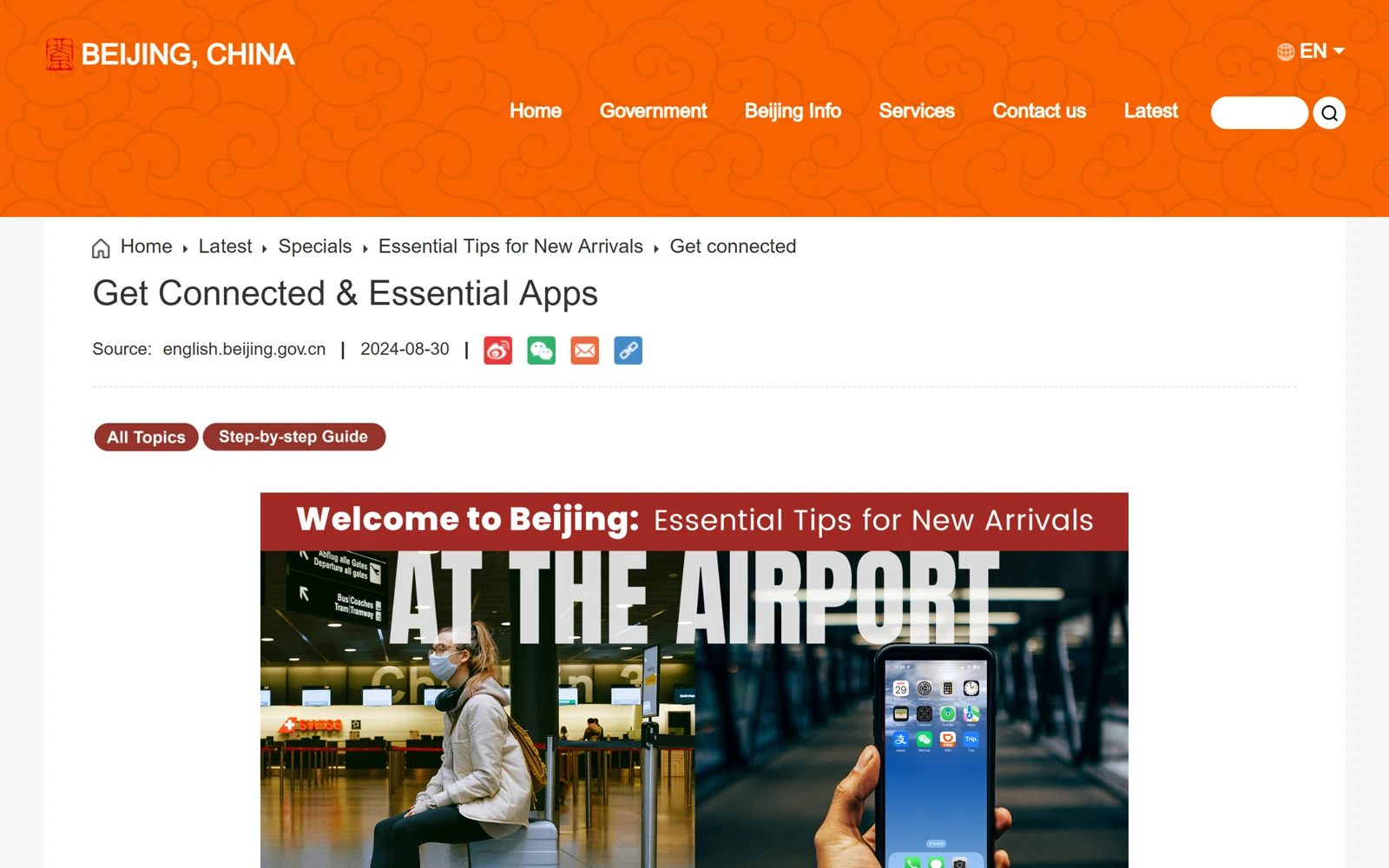
Download Alipay (international version) and/or WeChat. Complete passport verification if prompted. Link an overseas card following the official Chaoyang District walkthrough for overseas bank cards on Alipay and WeChat Pay.
Checkpoint: you complete a small purchase (convenience store, metro where supported) before your first ride.
Step 3: Install the DiDi Travel app
Download DiDi / Didi-Greater China from your app store while still at home if possible. Sign up with your international mobile number, enter SMS code, and complete profile fields.
Checkpoint: you reach the home map screen without an immediate “payment method required” loop.
Step 4: Add payment inside DiDi or defer to Alipay
If the app offers add card, try your overseas Visa or Mastercard. If binding fails, stop looping — open Alipay → Transport → Taxi instead of repeatedly re-entering card digits.
Checkpoint: you see either a valid payment method in DiDi or a successful taxi booking screen inside Alipay/WeChat.
Step 5: Set language and emergency contact
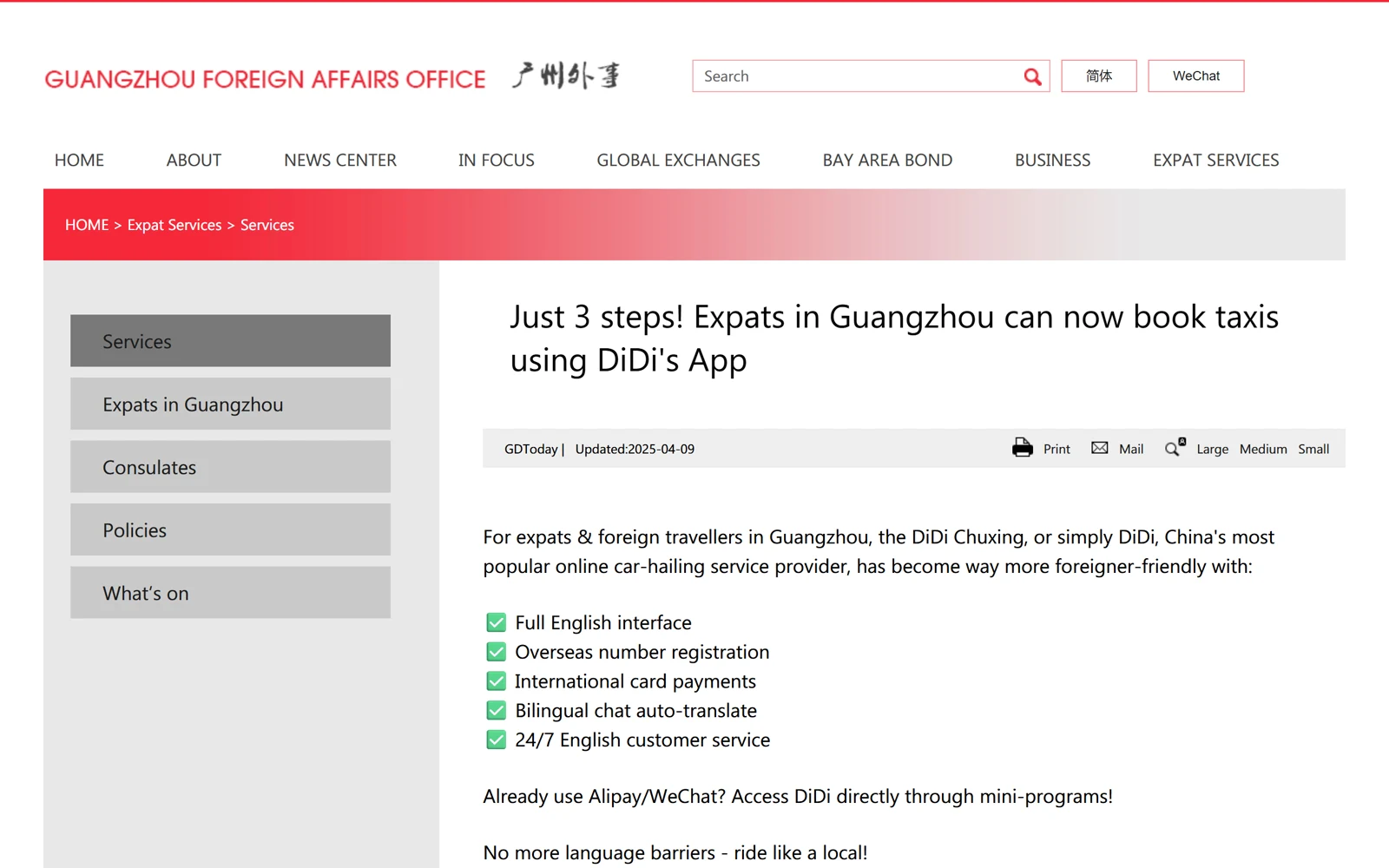
Switch app language to English where available. Guangzhou’s government post lists full English interface, bilingual chat auto-translation, and 24/7 English customer service as visitor-facing features — use English help if chat with drivers stalls.
Checkpoint: menus you need for booking a ride are readable without guessing icons.
Step 6: Save addresses the Chinese way
Paste Chinese address strings for your hotel, train station, and airport terminal door. Pinyin alone often fails geocoding. Screenshot the hotel’s Chinese name from booking confirmation.
Checkpoint: search autocomplete finds your hotel when you paste Chinese characters.
Step 7: Request a test ride in daylight
Before a critical meeting, book a short daytime trip near your hotel. Confirm driver photo, plate, and car color. Watch how long matching takes in that neighborhood.
Checkpoint: payment settles to “paid” without a pending charge stuck overnight.
Step 8: Airport or train station pickup
Follow on-screen terminal pins; many hubs use designated ride-hail lanes. If the app places the pin on a road you cannot reach, drag the pin to the official pickup zone or use the in-app chat template.
Checkpoint: you meet the driver without crossing restricted traffic lanes.

English interface support: what is translated and what is not
Guangzhou’s English service announcement is explicit about full English UI, overseas number registration, international card payments, bilingual chat translation, and English customer service. That combination targets expats and short-term visitors who do not read Chinese.
Real trips still mix languages: drivers may voice-call in Chinese, roadside signs stay Chinese, and some super-app menu paths remain Chinese even when DiDi itself is English. Use in-app chat with short Chinese phrases copied from your hotel, and enable translation where the app offers it.
If English support is non-negotiable for you, prefer the standalone DiDi build plus English help channels over a Chinese-only map aggregator UI.
When something breaks: fixes that actually work
These are the failures travelers report most often. Each item includes a fix you can try on the spot.
1. SMS verification never arrives
Toggle airplane mode, confirm roaming is active, and retry on Wi‑Fi calling if your carrier supports it. If the DiDi app insists on a number that cannot receive SMS in China, register through Alipay Transport → Taxi using the Alipay login instead.
2. “Add payment method” loops or card declined
Your issuer may block ride-hailing or cross-border e-commerce MCCs. Call the bank, approve the charge, or link the card inside Alipay first (official card networks listed on the Chaoyang page). Delete the card in DiDi and pay via Alipay mini-program rather than fighting direct bind.
3. Wallet works in shops but not for DiDi
Some wallets pay offline QR merchants but fail on recurring transport debits. Re-link the card, update passport photos if requested, and ensure your Alipay/WeChat account completed foreign visitor verification. Then book DiDi inside the wallet app so the trip uses the same rail as your successful shop payment.
4. Driver cannot find you at a mall or hospital gate
Send the in-app chat with a photo of the nearest sign, switch to a voice note, or walk to the marked pickup bay. Enable precise location. If matching keeps failing, cancel politely and re-request with the pin on the public road side of the building.
5. Trip stuck on “payment pending” after a ride
International DiDi help articles describe unpaid trips blocking new requests until the ledger clears. If your bank shows a hold, wait for the status to update, or contact in-app support with the trip receipt screenshot. Pay any outstanding trip before requesting again.
6. English address search returns nothing
Fall back to Chinese text from your hotel, use Amap to find the place, then share coordinates through DiDi’s map pin. Hotel concierge cards still help.
7. Wrong service tier arrives
Express and Taxi pools differ. If you needed a metered taxi for reimbursement, switch to Taxi before confirming. For larger vehicles, pick Premier/Luxe when listed on the government service tier menu.
8. App opens but map is blank
Check location permission, VPN interference, and data connectivity. VPN apps sometimes break map tiles; disconnect briefly to request the ride, then reconnect if needed.
Foreign card binding: what official sources promise vs what trips feel like
Official promise: multiple government English pages state that DiDi supports international mobile numbers and international bank cards, and that Alipay / WeChat also expose DiDi booking with overseas-linked cards for transport scenarios.
Practical limits you should expect:
- Network coverage: Alipay’s published overseas card list differs from WeChat’s. If you only carry one card brand, check the official Chaoyang page before you fly.
- Issuer behavior: Banks may require you to approve the first ride payment by phone. Corporate travel cards sometimes block ride-hailing merchants entirely — no app setting fixes that.
- Direct DiDi bind vs super-app: Many first-time visitors see smoother rides when payment runs through Alipay or WeChat than when a card is attached only inside DiDi. DiDi’s passenger terms describe payment processing as subject to electronic payment providers and issuing banks, not guaranteed by DiDi itself (DiDi passenger terms excerpt).
- Verification uploads: Passport photos and manual reviews can delay first use. Complete verification in the hotel, not at the curbside.
- Mixed language receipts: English UI does not always mean English tax titles on every receipt type; taxi mode may better match local reimbursement habits.
- Pre-authorization holds: Some banks show a temporary hold larger than the final fare until settlement completes. That is issuer behavior, not a DiDi-specific bug, but it can scare you if you check balances mid-trip.
None of the above is a ban on foreign cards — it is a warning that success is path-dependent. Build two working payment rails before you need an early-morning airport car.
Rules, safety, and platform limits
Ride-hail platforms must comply with local transport regulations; passengers still verify identity at pickup through plate match and in-app driver cards. Government guidance repeats:
- Use official or well-known platforms rather than informal “private car” offers at airports.
- Check license plate and driver identity before entering the vehicle.
- Keep location services on so the pin reflects where you stand.
DiDi’s terms also state that availability can be restricted by jurisdiction and that users access the service on their own initiative where local law allows (terms reference). For visitors, the actionable reading is simpler: use the mainland China passenger apps described in government guides, not overseas DiDi country apps meant for other markets unless documentation explicitly says otherwise.
If a dispute arises (route, fare, lost item), use in-app support and keep the trip record screen. For emergencies, use local emergency numbers and hotel security as you would in any country.
Backup plans when you do not want to fight the app
Hotel desk or concierge: ask them to call a licensed taxi or store the hotel address card. Many business hotels do this daily for guests.
Alipay-only path: skip standalone DiDi entirely; live inside Transport → Taxi with the same wallet you use for dinner.
Map app aggregator: launch rides from Amap or Baidu Maps after you find the POI in Chinese.
Phone booking: the China Daily government Q&A mentions taxi hotline 95128 in cities that operate centralized phone dispatch.
Street hail with meter: allowed in many cities when the roof sign shows vacant. Have your destination ready in Chinese; mobile payment may still be expected instead of cash.
Pre-booked transfer: Hunan’s guide notes that foreign travelers can also arrange airport shuttle style bookings through licensed online travel channels when listed alongside ride-hail — useful if you want a fixed meeting point with flight details attached.
95128 and traditional taxis complement rather than replace DiDi — they matter when data is weak, payment is unresolved, or you simply want a human dispatcher.
Frequently asked questions
Can foreigners use DiDi without a Chinese phone number?
Yes. Government guides describe registration with international mobile numbers on the DiDi Travel app. You still need SMS delivery and data service.
Can I pay for DiDi with a foreign credit card?
Often yes through Alipay, WeChat, or DiDi, but success depends on card network support and your bank. If direct DiDi binding fails, use Alipay Transport → Taxi with the same overseas card linked to Alipay.
Is the DiDi app available in English?
Municipal announcements and the visitor-oriented app build advertise English interface and English support channels in major cities. Super-app mini-programs may show mixed languages.
Should I use the DiDi app or Alipay for rides?
Use Alipay when it already powers your trip spending. Use the DiDi app when you want English-first ride features and standalone trip history. Keep both.
Can I use DiDi for airport transfers?
Yes in many large cities, with terminal-specific pickup pins. Allow buffer time and verify plates before loading luggage.
What is the difference between DiDi Express and DiDi Taxi?
Express uses private drivers on the platform; Taxi dispatches licensed cabs. Choose Taxi when you explicitly want a metered cab.
Does Amap or Baidu Maps work for ride-hailing?
Yes. They integrate ride services and help when addresses exist only in Chinese map data. DiDi remains the dedicated ride-hail brand with broad driver coverage.
What if I refuse to install Alipay or WeChat?
You can use the standalone DiDi app where payment binds successfully, or rely on hotel taxis and street hail. Visitor life without any Chinese wallet is harder but not impossible in tier-one cities.
Ride-hailing is optional — until you are standing in rain with no vacant taxi. Set up DiDi plus one wallet path early, save Chinese addresses, and keep a map app as plan B. For payments and SIM basics, continue with Mobile Payments: Alipay & WeChat Pay and SIM Cards & Data Plans.